Rosa Barba given a career retrospective in Rome
MAXXI, the National Museum of 21st Century Arts in Rome, is showing the retrospective, which covers over two decades of Barba's work in film, sculpture and writing.


MAXXI, the National Museum of 21st Century Arts in Rome, is showing the retrospective, which covers over two decades of Barba's work in film, sculpture and writing.
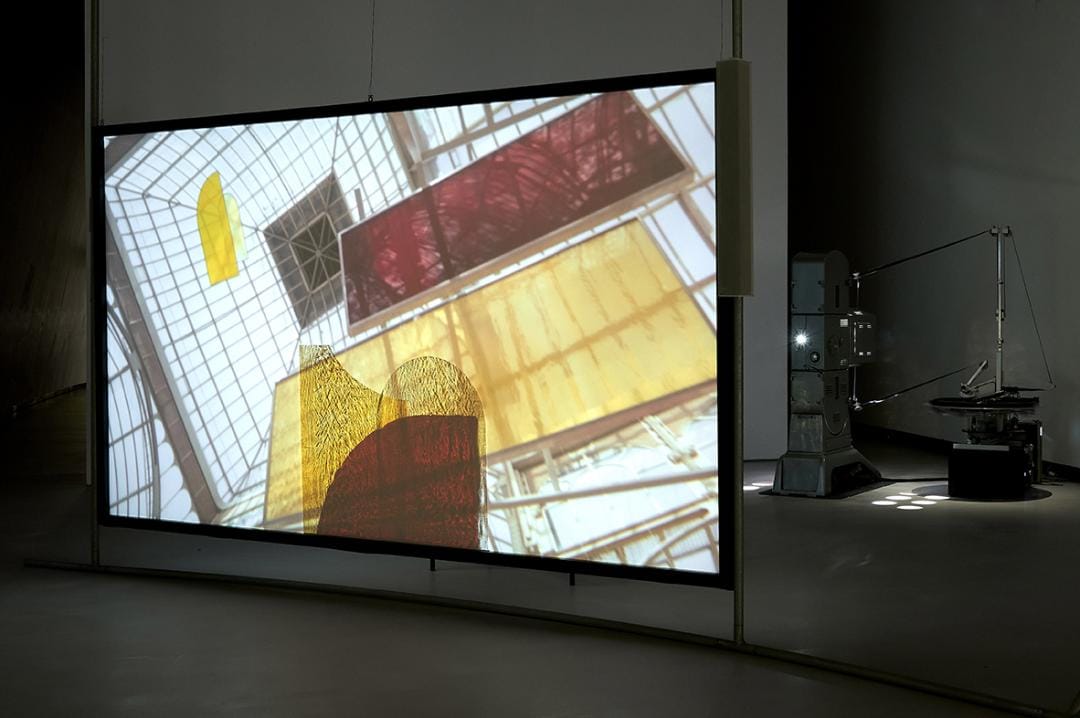
MAXXI, the National Museum of 21st Century Arts in Rome, is currently holding a mid-career retrospective on the innovative cinematic sculptures of Rosa Barba. At the show, titled Frame Time Open, light, transparency and reflection syncretically coalesce into a single entity under Barba's artistic guidance. The Italian visual artist and filmmaker has gained her international reputation for her artistic output which dynamically blends film, sculpture and writing.
The exhibition, curated by the museum's artistic director Francesco Stocchi, covers over two decades of Barba's work. It consists of around 24 pieces which have been arranged across the museum's exhibition space in the form of a large three-dimensional pentagram that guides visitors from three different entrances through a mesmerizing assembly of projectors, lights, sound and film. At the core of the exhibition are two new works by the artist, which have been specially commissioned for this occasion and are being premiered at MAXXI.
Myth and Mercury is a 35mm film jointly commissioned by the museum and the Gulbenkian Centre for Modern Art, and co-produced by Fondazione In Between Art Film and Hamburger Kunsthalle. Barba drew her inspiration from Gramsci's Prison Notebooks; in Myth and Mercury, she explains that “... the film also includes excerpts from Antonio Gramsci's life in prison. …Although the film's pace is slow, its stories encompass millions of souls. The Mediterranean [is perceived] as a model of transformation and resistance…”
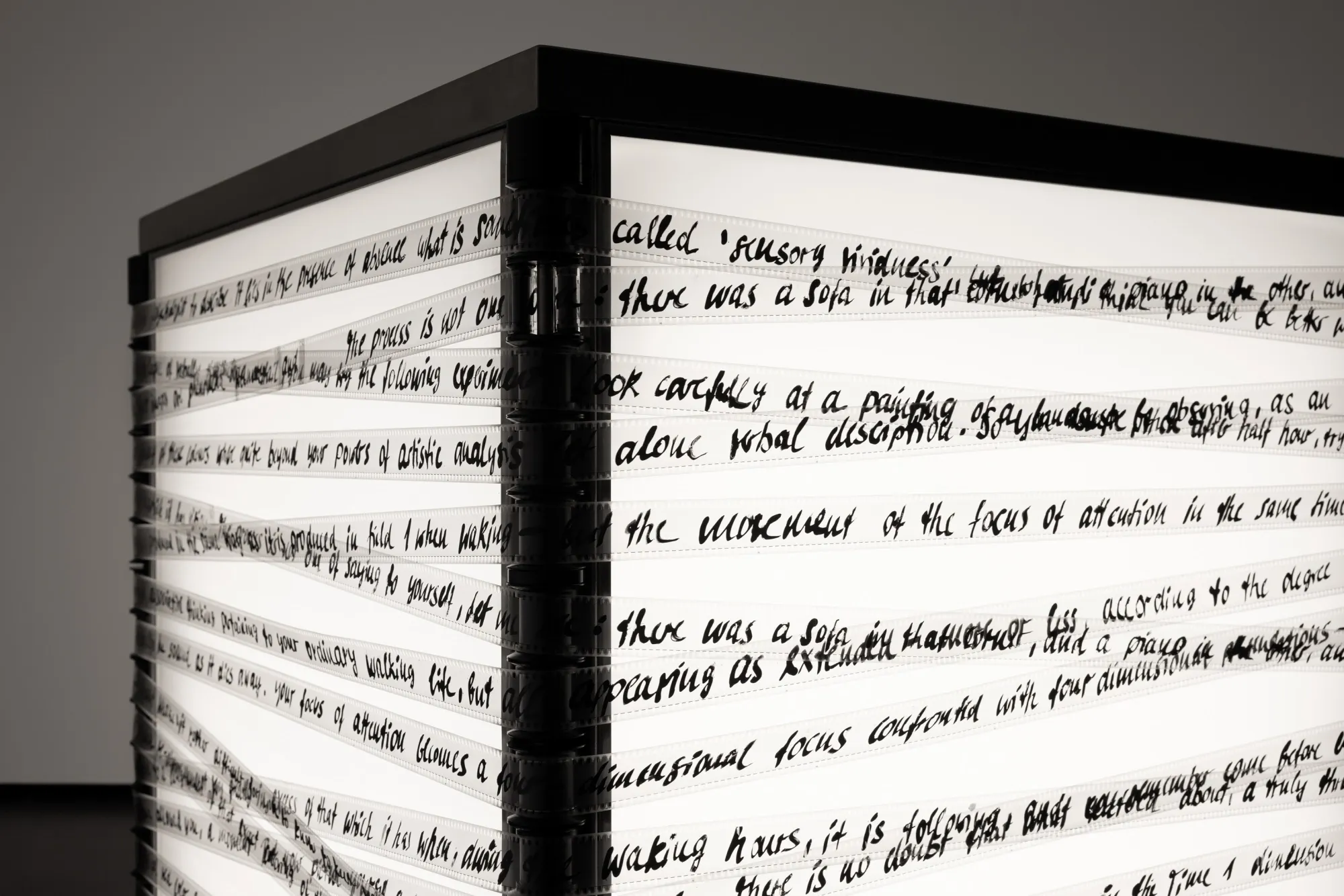
Barba's work They Are Taking All My Letters (2025) is a kinetic sculpture composed of steel, LEDs, acrylic, aluminum, motors and 34 vertical strips of 70mm celluloid film in perpetual motion. The strips are inscribed with words taken from texts by Susan Howe, Charles Olson, Robert Creeley and the artist herself, which constantly shift and rearrange, generating ever-changing combinations of sentences as they whir past each other in a web that reflects on time, intermittent light and on the translation of language into image.
Barba's kinetic sculptures represent one of her unique contributions to the field of moving image art, in which her predilection for architectural thinking finds an outlet through the combination of light, sound, language and physical space. Drawing on the legacy of Expanded Cinema as elaborated by Gene Youngblood, Barba does not hide the cinematic machine from the viewers’ gaze; by revealing it in the exhibition space, she lends it a tangible corporeality that pulsates with sound and light. Cinema transcends its passive role in Barba's hands, becoming a living and breathing entity that interacts and shapes what it sees.
The Museo nazionale delle arti dei XXI secolo, or MAXXI, is a national museum dedicated to the art and architecture of the 21st century. The museum consists of two sections: MAXXI Art and MAXXI Architecture. Inaugurated in 2010 in Rome's Flaminio neighborhood, the museum is managed by its eponymous foundation under the auspices of the Italian Ministry of Cultural Heritage and Activities. MAXXI's vocation as a place for the conservation and exhibition of 21st century art is reflected in its programming activities, namely exhibitions, workshops, conferences, shows, screenings, and educational projects.
The retrospective exhibition Frame Time Open will remain on view until March 8, 2026. More information about the exhibition, ticket purchases, and other events can be found on the MAXXI site.