Gaby Wijers on community-based methods for the care of digital art
Gaby Wijers, Director of LI-MA, speaks about preservation as community practice and the future of the symposium Transformation Digital Art.


Gaby Wijers, Director of LI-MA, speaks about preservation as community practice and the future of the symposium Transformation Digital Art.
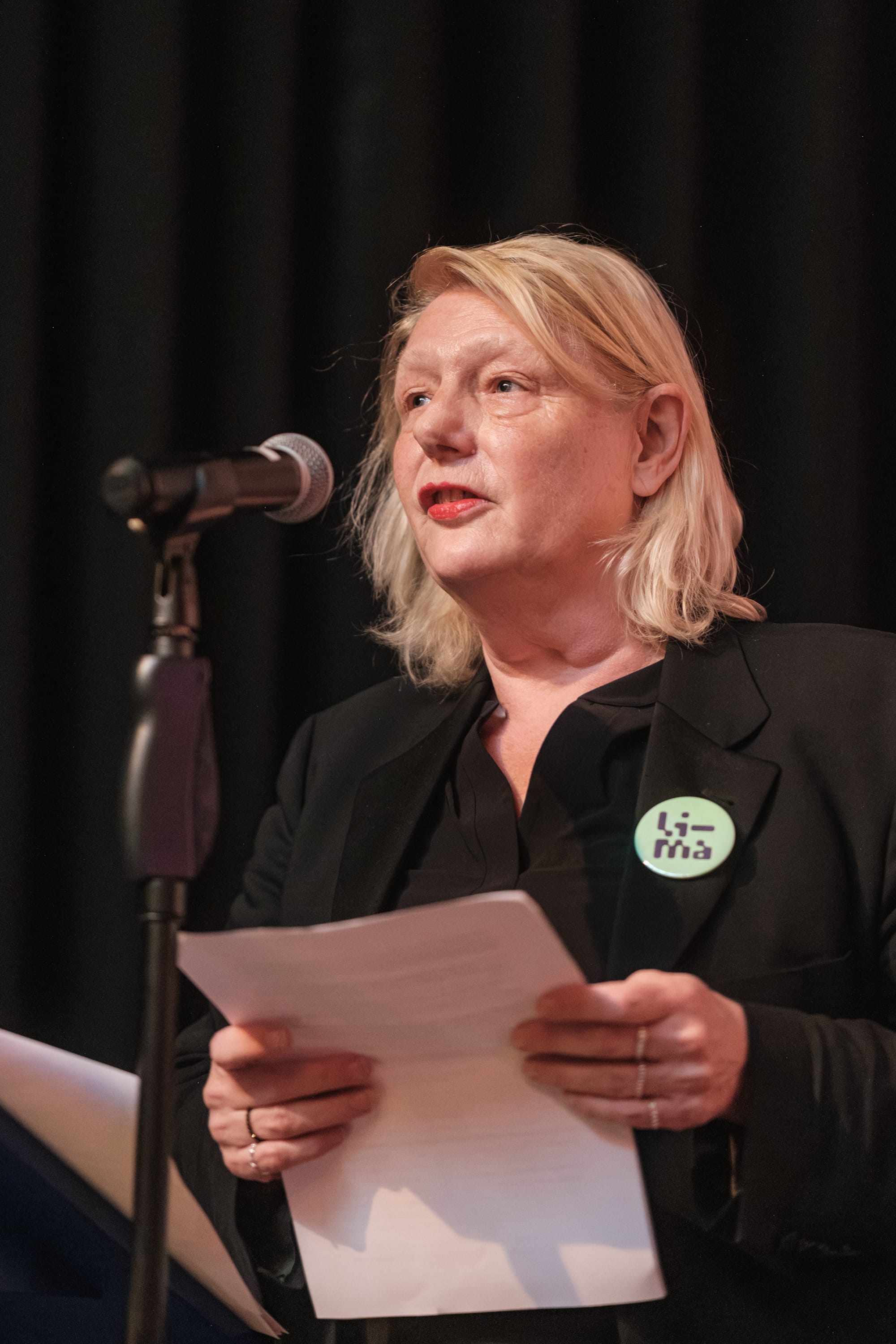
Gaby Wijers is the Director of LI-MA, which since 2013 has grown into a leading centre of expertise for the management, preservation and distribution of media art. Based in Amsterdam, the roots of LI-MA go back to pioneering organisations such as MonteVideo and Time Based Arts, which were established in the Netherlands in the 1970s. As one of Europe's leading distributors of media art, LI-MA ensures that work by young talent, mid-career artists and lauded icons is distributed to renowned international museums, festivals and institutions.
LI-MA’s annual international symposium Transformation Digital Art, initiated in 2016, has sought to showcase and discuss strategies for documenting, transmitting, and preserving digital art. The symposium serves as a collaborative platform for artists, curators, and conservators to engage, critically reflect, and share best practices. The 2026 edition represented the 10th anniversary of the symposium, organized under the theme Networks: Structures of Collaboration, Care, and Trust. In this interview Wijers recalls her favorite moments from the recent edition and speaks about the future of the symposium, as well as her thoughts on how communities can take an active role in caring for digital art.
In March 2026 you organised the 10th anniversary edition of the symposium Transformation Digital Art. What were some of your personal highlights at the event?
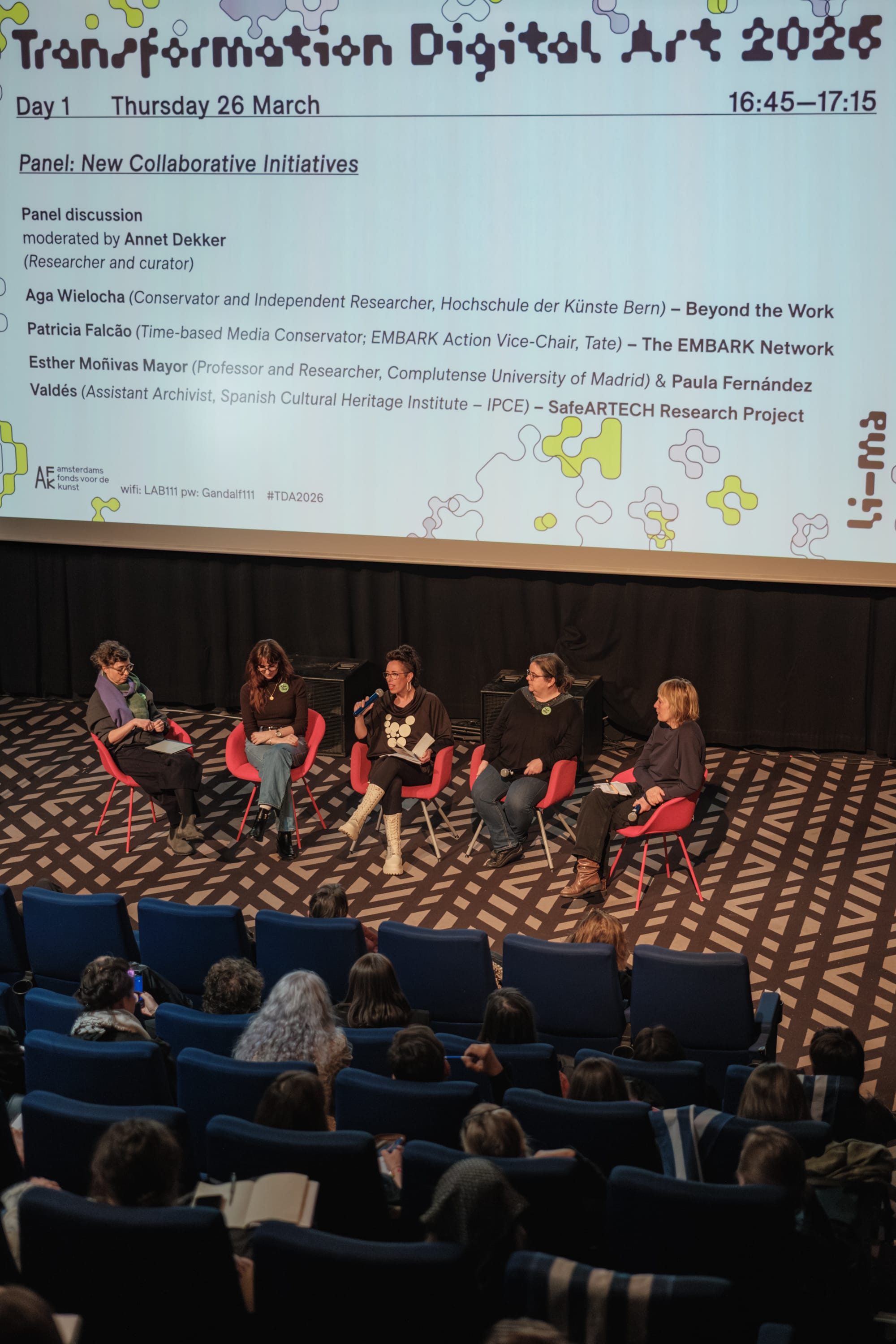
The 2026 edition, themed Networks: Structures of Collaboration, Care, and Trust, focussed on how digital artworks are sustained not only through technical solutions, but through shared responsibility and collective decision-making.
I loved Sarah Friend’s keynote about the life and death of digital artworks and related questions. When we say a digital thing, place, or system dies, what exactly do we mean? “If we can say that it dies, does it mean that it lived?” is one of many logically following questions. Sarah added: can we find new ways to think about the death of digital things by looking at death in other contexts? What does it mean to have a good death? And maybe also: is death good for anything? I also appreciated the presentation of our colleagues from Pixelache who showed alternative and fun ways in memorising and accessing their archive and legacy.
And there was Constant Dullaart’s ROTBOTS / Content Machines Workshop, where automated content systems were built collaboratively. It was a hands-on workshop to critically examine, instead of passively consuming, to actively construct an automated content generation pipeline. It made the participants understand the logic, biases, and possibilities embedded in platform-based content creation. Beyond technical competence, participants developed critical literacy about platform economics, algorithmic aesthetics, and the industrial logic of automated content production. By building this system collaboratively, they were able to articulate and investigate questions about authenticity, authorship, attention economies, and the material conditions of contemporary media production.
Care and trust were two of the keywords included in the theme of the symposium. What are your thoughts about the recent fascination for trustless systems, such as blockchain, AI, and related technologies?
Technology, and AI in particular, offers new possibilities but also reshapes authorship, documentation, and preservation in ways that introduce risks, raising questions of control, benefit, exclusion, and the reliability of the tools and datasets shaping creative and archival work.
AI, blockchain and related technologies were discussed in multiple panels. The last decade offered a seductive alternative to trust: systems that promised to work without it. Blockchains, smart contracts, and similar decentralised protocols claimed to be "trustless", but in fact replaced trust in people and institutions with trust in cryptographic verification.
Care is an ever-relevant term in conservation practices. We always seem to be operating at a deficit for care – financial and political, and not just in digital art. Do you see a way out of this eternal crisis?
I would like to state that care starts with taking responsibility to take care, on a bigger or smaller scale. In care, it is always people and dedication rather than institutions or the system. We need an infrastructure that provides the tools and resources for people to feel empowered to take care, collaboratively and community-based.
It doesn't need to be institutionalised. What matters most is that people have access to the knowledge, tools and resources they need to take responsibility for care. We are also looking into how community-based approaches can contribute to this, and how we can create structures in which knowledge and responsibility can be shared.
Responsibility also lies with the people who are themselves part of the digital art culture. They know what is meaningful and what should be preserved. By empowering these communities to take an active role in caring for digital art, we can perhaps challenge the idea that preservation is something that can only be secured by institutions or through a single, permanent system. LI-MA operates as an expertise centre and network organization, preserving digital art works thanks to broader infrastructures, which makes them less vulnerable.
A current project at LI-MA is an exhibition with Nxt Museum on the early development of video art and experiential media practices in the Netherlands. What are some of those early treasures on view that deserve wider recognition?
Here of course all artworks need to be mentioned, but especially: Jeep and Livinus van der Bundt’s technical experiments with abstract images and sound are rather unknown. The technical experiments with images and sound, painting with light, are rather unknown. The same goes for the experiments by the Vasulkas or Nan Hoover.
We made a new presentation mode with the experiments to make it more of an experience, to translate it to a new form and a new audience also.
How do you transform Transformation Digital Art in the next ten years? What would you like to see it do or become?
The next edition of Transformation Digital Art will take place 4-5 March 2027. The theme for 2027 is Embodiment. It seems embodied knowledge and practices counter the idea that digital art is purely abstract or disembodied, reminding us that our physical bodies anchor how we interact with pixels, code, and immersive environments. In contrast to tangible heritage, where cultural identities are manifested through physical objects, intangible heritage is defined through tacit reliances and embodied practices. What does this mean in and for digital art, and what can we learn from thinking about digital art in these terms? For the years that follow, we want TDA to continue to explore themes that are relevant to the future life of digital art. In 2028, for example, we are considering Infrastructures as a theme.
Over the next ten years, I would like to see TDA bring more different communities and perspectives together: more students, curators, conservators and archivists, scholars, but especially artists. To let TDA become the place where the different communities that shape the life of digital art meet: those who create it, those who present it, those who collect and preserve it, and those who research and critically reflect on it. I would like it to create more opportunities to share needs, knowledge and responsibilities, and to bring the more collection-based world of digital art into closer dialogue with the worlds of artistic production and presentation.
Ultimately, I would like TDA to become even more of an annual gathering and exchange hub for the international digital art field: a place to think collectively about the future life of digital art and its sustainability. Not only by discussing technological solutions, but also by critically reflecting on the technologies we use and envisioning alternative, collaborative ways of working. This ambition also comes at a moment when the infrastructure for digital and media art is increasingly under pressure. For LI-MA, this makes building sustainable networks for knowledge exchange, preservation and artistic development more urgent than ever. TDA is an important part of that infrastructure.
This also means looking beyond preservation as a purely technical or institutional responsibility. TDA can demonstrate how art and artistic practices can contribute to thinking about care, sustainability and collective responsibility – and how artists, institutions, researchers and communities can learn from one another. And perhaps most importantly, TDA should be a place to celebrate digital art. Care is not only about looking after, preserving and conserving. It is also about recognising the significance of something, making it visible, giving it space and allowing it to remain part of our cultural future.