Rose Lowder
The moving image artists that move culture → Rose Lowder weaves botanical subjects together on the film strip.


The moving image artists that move culture → Rose Lowder weaves botanical subjects together on the film strip.

Rose Lowder (b. 1941) is a Franco-Peruvian filmmaker and visual artist. Born in Lima, Peru to a British businessman, she was encouraged from an early age to pursue an artistic education, which she initially undertook in her hometown. She continued her education in London at Regent Street Polytechnic and then at the Chelsea School of Art, taking classes in sculpture, painting, design and drawing. After an initial stint as an assistant editor at the BBC, she moved with her partner to France, where she has been residing in the city of Avignon since 1972.
Lowder's artistic practice is distinguished by a unique approach to filmmaking, which is characterized by an intuitive and comprehensive understanding of her preferred instrument, the 16mm Bolex camera. Coming from an educational background informed by the visual arts, Lowder's first encounter with experimental film happened during her work in London, when she attended screenings of experimental films at a local bookstore. The realization that films could be made without the necessity of a large crew or finances encouraged her to take up the camera.
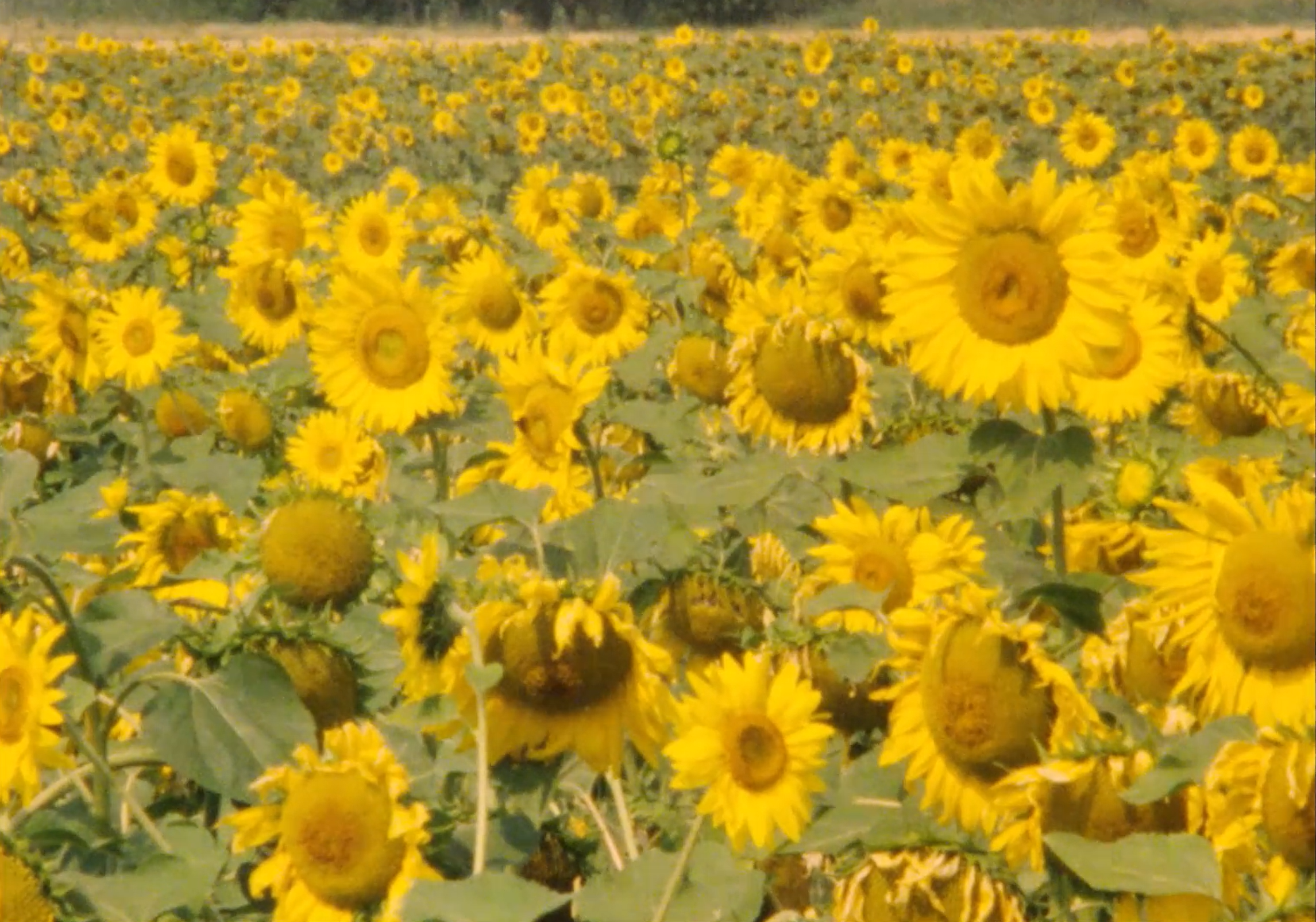
Through a long and meticulous process of independent research and experimentation with a Bolex 16mm film camera, Lowder developed a process which weaved images together on the film strip. This is achieved by utilizing the camera's mechanism to rewind the film, to expose individual frames, to skip frames, and to expose any remaining unexposed frames at different intervals, thereby creating an impression of vibrating visual density and simultaneous activity. She tests the limitations of human perception through the use of different frame rates, shifting focal lengths, and overlapping images which nudge the viewer to reevaluate the image onscreen not as a static entity, but as a rhythmically pulsating painting. Lowder ingeniously substitutes the film editing table with the camera's internal mechanism by leveraging its flexibility.
The application of this idiosyncratic technique to film enables Lowder to catch new spatio-temporal realities that are tucked away in the settings which she most often films: botanical subjects, organic farms, and rural landscapes. Her inclination towards ecological themes is, likewise, mirrored in her filming technique which relies on low-tech, mechanical wind-up equipment and eschews post-production manipulation of the material at the lab.
Works by Rose Lowder garnered great success early in her career amongst avant-garde cinema circles and at international film festivals alike. Major institutional recognition across a spectrum of well-established contemporary art museums in North America and Europe have made her name more broadly known, with exhibitions spanning large-scale gallery installation, dedicated retrospectives, and permanent museum collections.
Her works and notebooks (which serve as detailed records and graphic scores of individual pieces) are included in the permanent collections of Centre Pompidou (Paris), Museum of Modern Art (New York), Musée d’Art Moderne de Paris, and Art Gallery of Ontario. Her films have been shown at solo and group exhibitions at Tate Modern, Archivio Aperto, Kunsthalle Zürich, Palais de Tokyo, MO Museum (Vilnius), and Hay Festival Arequipa/Casa Gibson (Peru).
Rose Lowder's five-decade career has been crowned by a number of lifetime achievement honors, prestigious contemporary art prizes, and academic fellowships. For the longevity and quality of her work as a female artist, she was awarded the Outstanding Merit prize (worth €10,000) by AWARE: Archive of Women Artists Research and Exhibitions in 2023. In October 2026, she received the Pudú Lifetime Achievement Award handed out at the 33rd Valdivia International Film Festival (FICValdivia).
Lowder's fascination with experimental film first emerged while attending screenings of experimental works at the Better Books bookstore in London in the late 1960s. At the time, the lack of any viable institutions dedicated to this genre motivated her to establish Archives du Film Expérimental Avignon (AFEA), a non-profit film study collection, research center, and publishing initiative, together with her partner Alain-Alcide Sudre in 1981. AFEA is an organization dedicated to the preservation, exhibition and promotion of avant-garde experimental film.
In recognition of her outstanding work in the field, Lowder was appointed an associate professor at the École des Arts de la Sorbonne, where she taught the history, aesthetics and practice of experimental film for nearly a decade. Her most expansive project has been Bouquets (1994-2022), a series of one-minute silent films which she initially conceived as a method of reducing waste by recycling the short ends of film reels. These works evolved into a recurring series of moving image paintings that capture nature over the duration of days, weeks, and months, reminiscent of the Impressionist pieces of Cézanne, Morisot and Van Gogh.
Lowder's films are distributed through Light Cone, as well as by LUX and the Canadian Filmmakers Distribution Center.