Position Spaces __ Maya Jeffereis
Maya Jeffereis on her efforts toward ecological darkroom practices and allowing plants to “speak” through film.


Maya Jeffereis on her efforts toward ecological darkroom practices and allowing plants to “speak” through film.

What recent exhibition did you see that made a strong impression on you and why?
I recently rewatched Hiroshima mon amour (1959) directed by Alain Resnais and written by Marguerite Duras while I was researching and filming in Hiroshima, my ancestral homeland. The film is a deeply impactful meditation on private pain and public tragedy in the aftermath of the atomic bomb. In the opening sequence two lovers entwine, their skin a landscape covered in a blanket of ash. Cutting between scenes of intimacy, archival footage of the aftermath, and reenacted scenes, the film enmeshes past and present, memory and forgetting. Their dialogue is a series of assertions met with negations: an insistence on witnessing but not seeing, knowing and not knowing, forgetting and remembering. I first saw the film before I ever visited Hiroshima. Walking through the city, I was looking for traces of the past.
What are you working on right now and where will you present your work next?
I’m currently working on a new film installation centered around Hiroshima hibakujumoku (atomic bomb survivor trees) as a metaphor for survival and resistance amidst total devastation, and a meditation on how land holds memory. During the atomic bombing, my family both perished and survived. Relatedly, trees that withstood the explosion bloomed the following spring, offering survivors hope that life could flourish again.
While in Hiroshima, I visited as many of the surviving trees that I could locate. Gathering leaves that fell from the trees, I made phytograms on 16mm (a photographic technique that utilizes the internal chemistry of plants to create images on emulsion). One species of hibakujumoku includes ginkgo trees – a living connection between the past and present. Not only did they withstand the atomic blast, they also survived the asteroid impact that led to the extinction of the dinosaurs. Using plant-based developers, I hand-processed 16mm footage I filmed around the city as well as archival imagery in an effort toward ecological darkroom practices that wouldn’t impart more toxins in a land already devastated by radiation, fires, and black rain. I find myself moving more toward abstraction in this film, as traces of leaves flicker and flash across the screen. Because I made the phytograms on sound stock, their impressions are actually audio recordings, allowing the plants to “speak” through the film. In this work, I’m thinking about the interiority of plants, trees as witness, deep time, and how we might envision a radical, sustainable, and liberatory future.
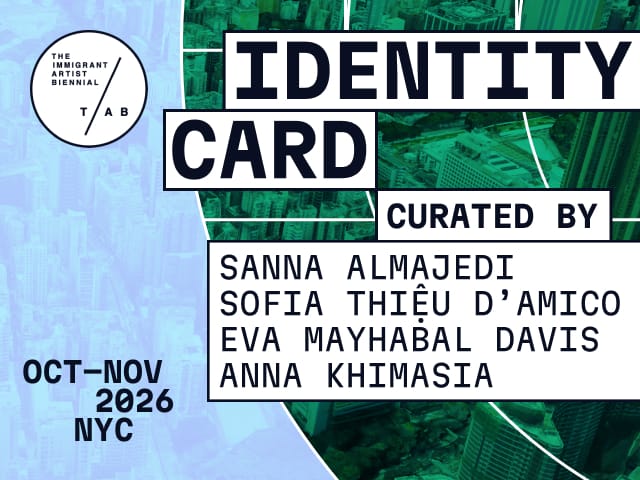
This fall, my work will show at the Seeds of Change Conference in Manchester, the Philadelphia Asian American Film Festival, and The Immigrant Artist Biennial in Brooklyn. In February 2027, my work will be included in Invention into Existence, a group exhibition curated by Swagato Chakravorty at the Henry Art Gallery in Seattle.
What are the biggest challenges in sustaining your practice?
Living in precarity amid state violence, genocide, and environmental devastation, how do we remain community and action-oriented while also holding expansiveness, capaciousness, and the space for dreams?