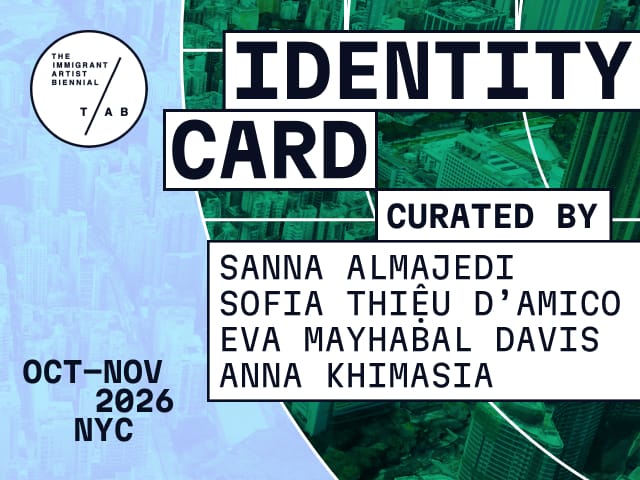
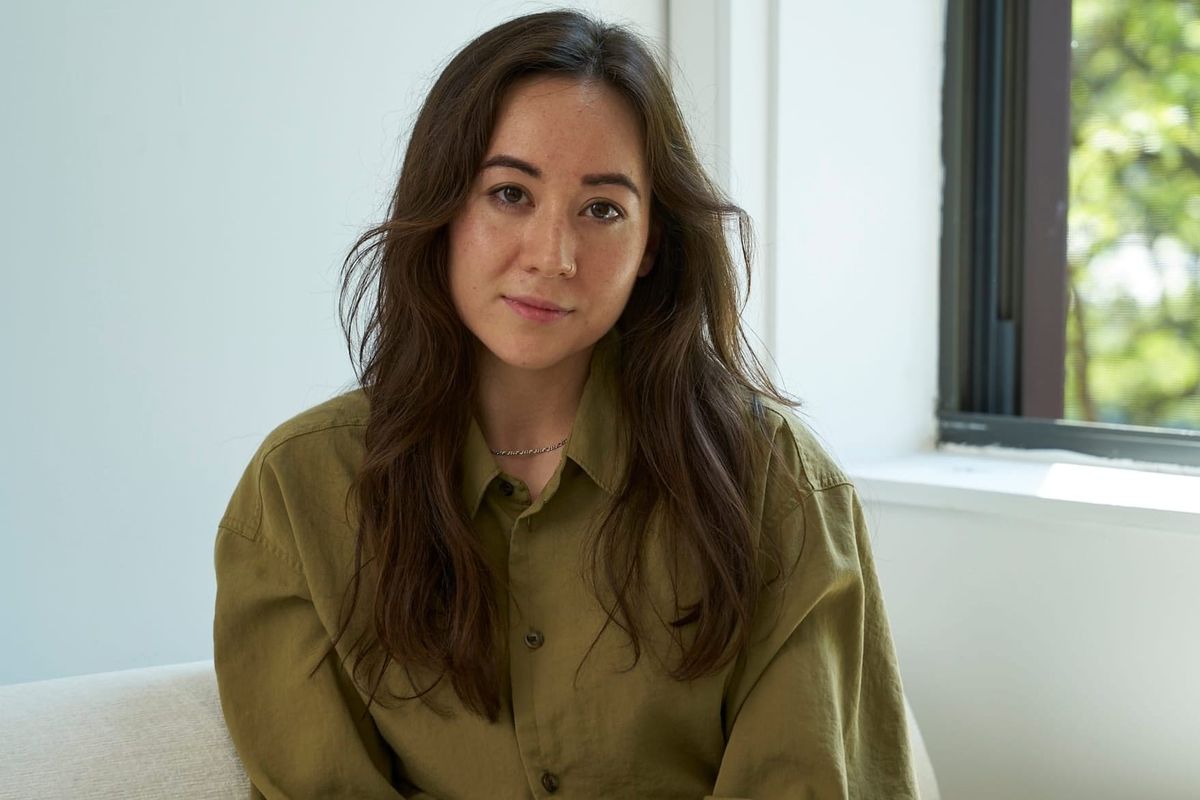
Sofia Thiệu D'Amico on curating The Immigrant Artist Biennial
Sofia Thiệu D'Amico is co-director of Transmitter in New York. She discusses the dexterity and responsiveness of art in relation to our lived reality.


Sofia Thiệu D'Amico is co-director of Transmitter in New York. She discusses the dexterity and responsiveness of art in relation to our lived reality.
What are some of the unique opportunities and challenges in curating time-based art?
Hi Kinoki! Thank you very much for your thoughtful questions. Time-based art, for me, is unique in its dexterity and responsiveness to our lived reality. Less tethered to traditional mediums and hierarchies of materials, I feel time-based work responds most nimbly and effectively to the most urgent issues we encounter on a daily basis. You can organize a screening or project a film in a very quick, guerilla, DIY way when needed, for example. Its capacity to experiment with reality, impermanence, and technological mediation—and especially its demands on our attention and awareness—make it especially exciting to me. Challenges are also similar: in an increasingly digital world how does time-based art maintain the often radical and evasive quality that has made it so effective? And because it circulates slightly outside traditional structures of commodification and value, how do we find the spaces and resources to support it?
For this biennial edition, I’m very excited to be collaborating with several brilliant artists working across film and performance, including Maya Jeffereis, Pearlyn Lii, Simon Liu, Andrew Yong Hoon Lee, Charlie Perez-Tlatenchi, and many amazing others. Your important work at Kinoki is also a part of this mission.
What are you working on next?
Mostly I am excited to be writing more, and also working to support exhibitions and programming with local artists with my comrades at Transmitter. Keep updated on our programs there!
The poem “Identity Card” by Mahmoud Darwish inspired the title for this edition of The Immigrant Artist Biennial. What is another poem that nurtures you in your work?
There are so very many, don’t make me choose!
I’m very happy that the catalogue for this year’s Immigrant Artist Biennial includes Natalie Diaz’s poem “exhibits from The American Water Museum,” taken from her book Postcolonial Love Poem, which has been prophetic and foundational to me as a cultural worker. Whenever I lecture in an academic context, I always include this poem as a class reading. I see it as a north star for my work, and I feel it tells you everything you need to know about museums, exhibitions, and cultural spaces: importantly it asks us to attend to our global kin above all else. It reminds me to remain critical and alert within our institutions, and attentive to how creative work might become life-giving, leading us toward action, restitution, and redistribution where they are most needed. It’s a lengthy one that I highly recommend.
Again and again, I also turn to the work of bell hooks, Anne Carson, Joy Harjo, Toni Morrison, Mary Oliver, and Etel Adnan. This can be a whole conversation. This season, I’ve loved Lucille Clifton’s poem, “won’t you celebrate with me”:
won't you celebrate with me
what i have shaped into
a kind of life? i had no model.
born in babylon
both nonwhite and woman
what did i see to be except myself?
i made it up
here on this bridge between
starshine and clay,
my one hand holding tight
my other hand; come celebrate
with me that everyday
something has tried to kill me
and has failed.