Influential performance and film artist Valie Export dies at 85
Export was described as one of the most visionary feminist artists to emerge in Europe in the second half of the 20th century.


Export was described as one of the most visionary feminist artists to emerge in Europe in the second half of the 20th century.
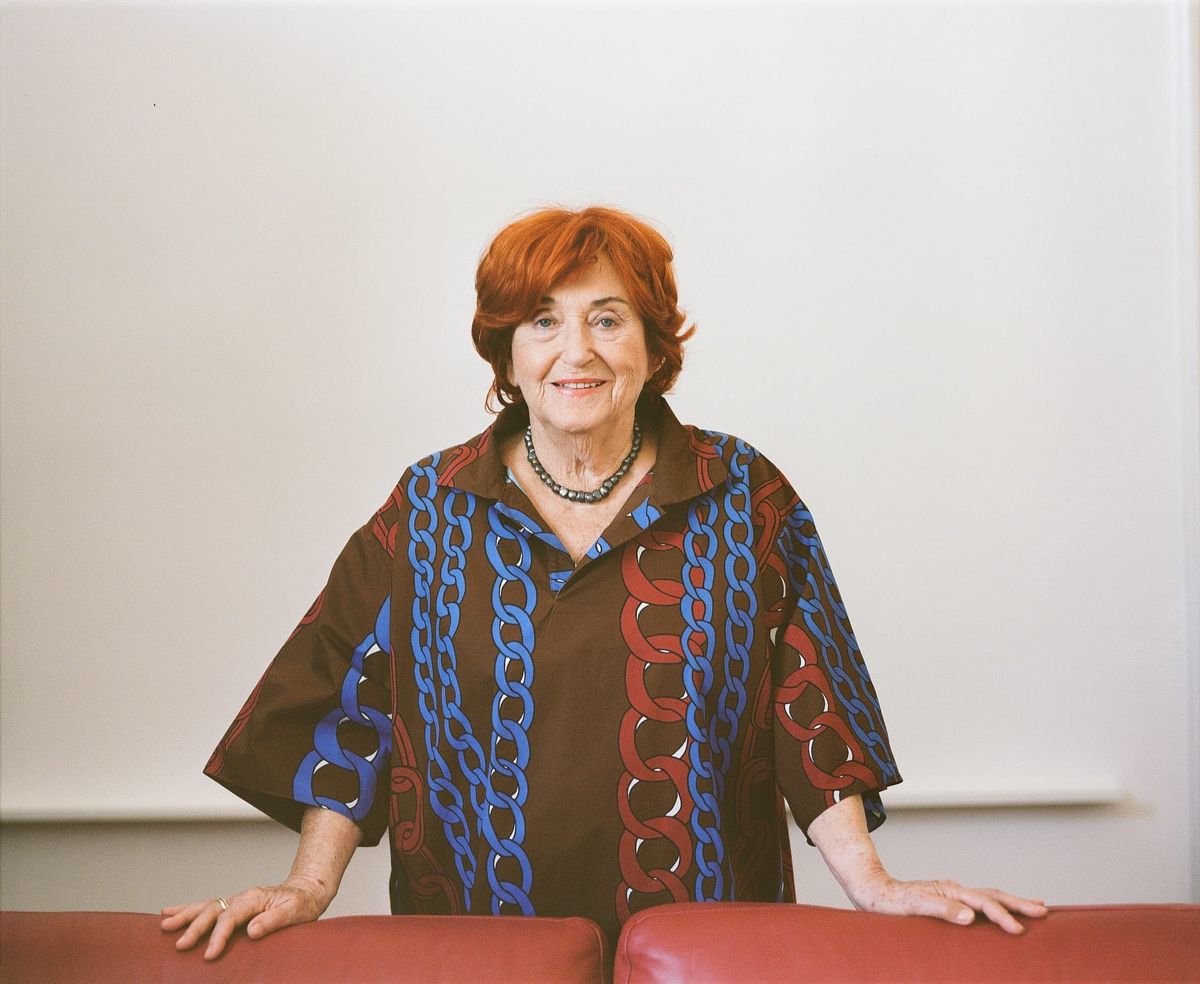
Valie Export, the Austrian film artist and performance artist renowned for her subversive and humorous inversion of the male gaze, passed away in Vienna on 14 May. The news of her demise was announced on the evening of the same day by Thaddaeus Ropac, the gallery which represented her.
Commenting on her demise, the gallerist had this to say about Export's singular artistic vision: “Valie was one of the most visionary feminist artists to emerge in Europe in the second half of the 20th century. Her passing marks the loss of a singular perspective in contemporary art, one that influenced artists across generations. Her pioneering work continues to be of such great urgency.”
Valie Export was born in 1940 as Waltraud Lehner in Linz, Austria. She was left fatherless during the Second World War and placed into a convent with her two older sisters, while her mother continued working as a schoolteacher. Deeply affected by an atmosphere of constraint that she felt was asphyxiating her life, she filed for divorce after a brief marriage and left for Vienna to study art. Her artistic career gained momentum in the late 1960s, when she then shed her birth and married names, adopting the moniker VALIE EXPORT, stylized in all-uppercase letters.
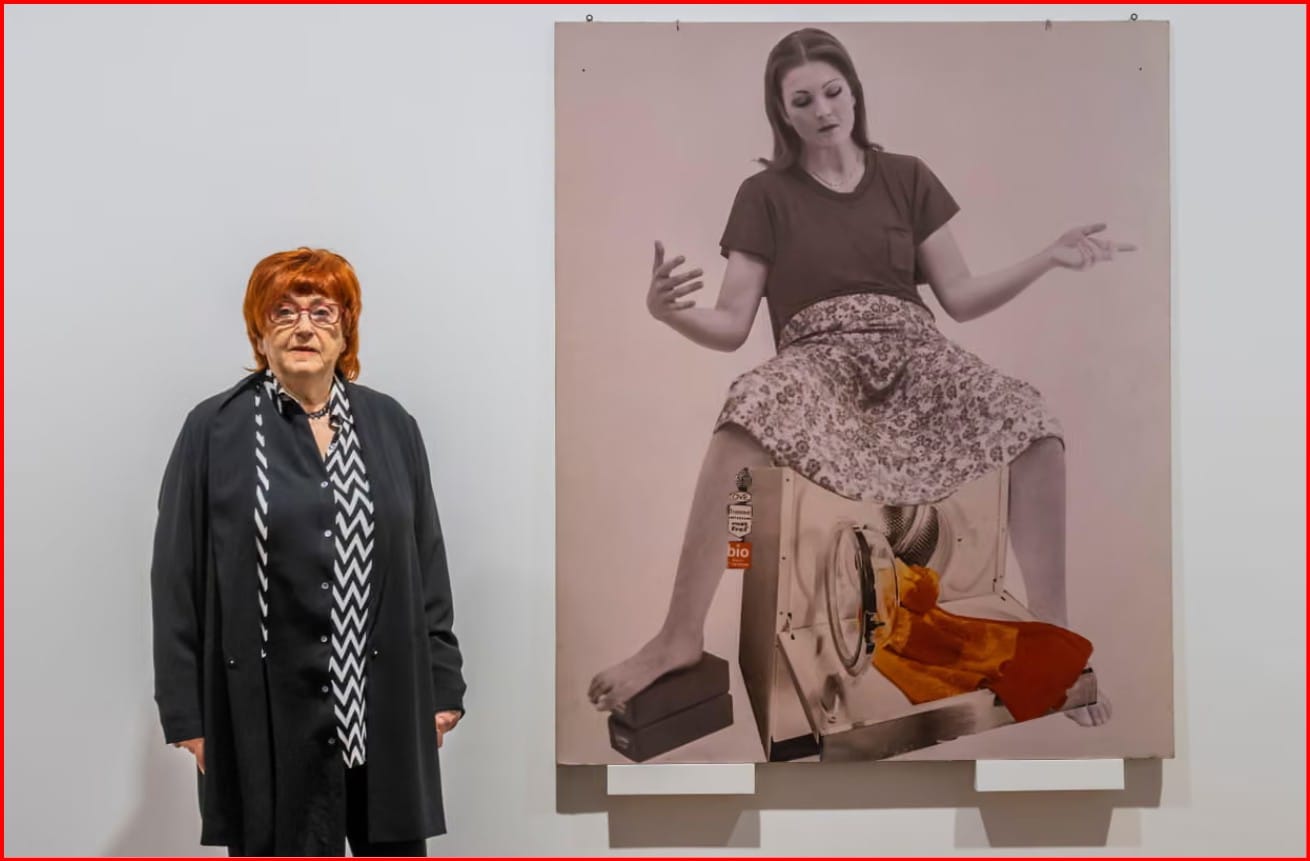
The late 1960s was a period of increased creativity for her, during which she deployed her body in innovative and provocative ways that undermined the accepted social mores of postwar Austria, with the intent of rejecting patriarchal structures and reclaiming female sexual agency. She gained notoriety in Austrian society with her 1968 performance Tapp und Tastkino, in which she walked the streets of Vienna with a cardboard box representing a cinema strapped across her upper body, with a curtain through which passersby could touch – but not see – her bare breasts.
Export was not content with mere provocative gestures to convey her post-patriarchal and feminist vision. Her practice encompassed a greater scope of topics, expressed through her multidisciplinary body of work in film, video, expanded cinema, photography, installation and written works. In her film Facing a Family (1971), Export exposes the passivity of television spectatorship as seen in the example of a family sitting mesmerized in front of a television set; she uses her body as a measuring device in Body Configurations (1972-1976/1982), juxtaposing the tensions that hover in the interstices between architecture, surveillance and bodily discipline in an urban environment.
After her bombastic entry onto the art scene in the late 1960s, Export showcased her art in a series of major international exhibitions and festivals, such as the 1977 and 2007 editions of documenta in Kassel. She received the Golden Bear for her feature film The Practice of Love at Berlin International Film Festival in 1985. Together with Maria Lassnig, she participated in the Venice Biennale in 1980 as the first female artists to represent the Austrian Pavilion. In 2015, her hometown of Linz acquired Export's archive, including it in the collection of the Lentos Kunstmuseum.
In 2023, she was given an expansive retrospective exhibition at Albertina Modern in Vienna. In 2024, she established the VALIE EXPORT FOUNDATION, a non-profit that aims to preserve and research her work. Valie Export's work is in leading public and private collections such as: Secession, Vienna; Centre national d’art et de culture Georges Pompidou, Paris; Nationalgalerie, Berlin; Tate, London; The Museum of Modern Art, New York and many more.