Position Spaces __ Tenzin Phuntsog
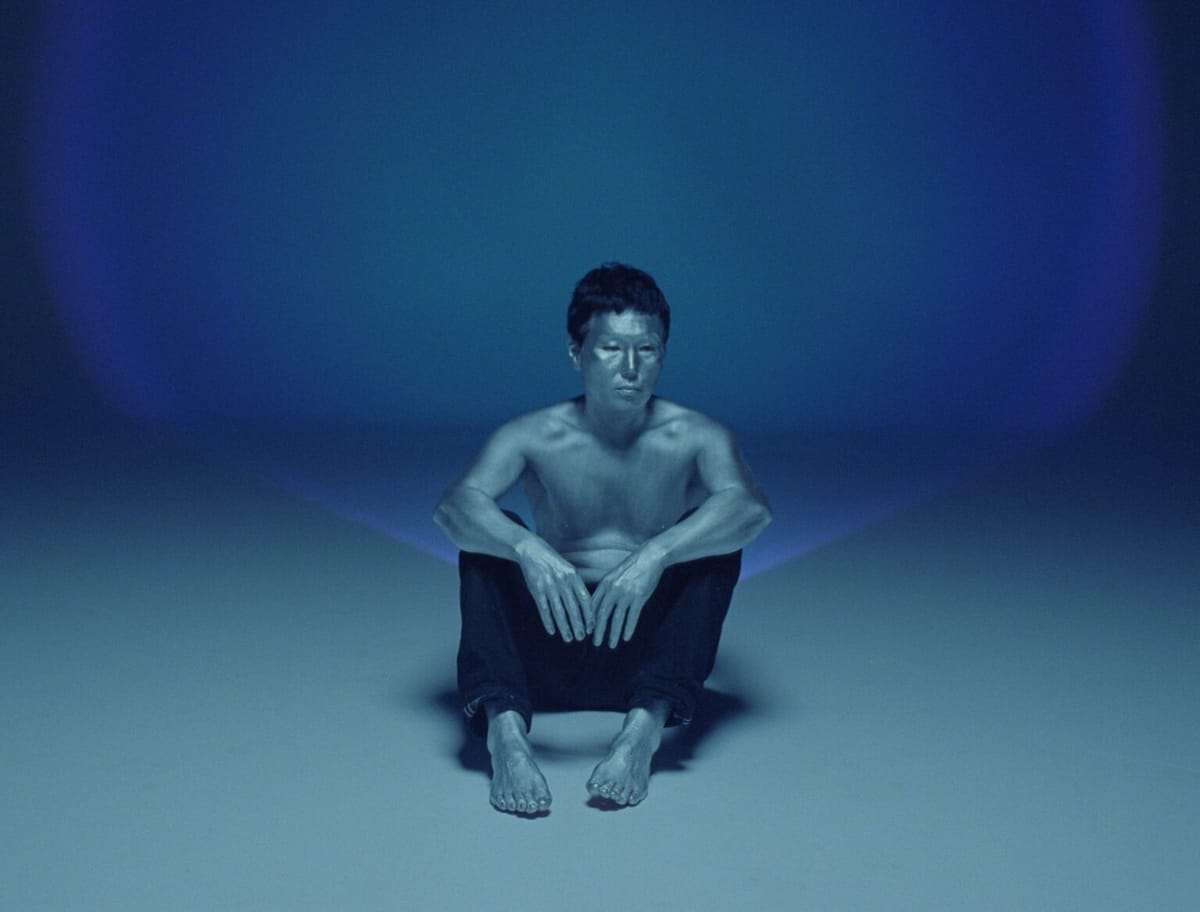
Tenzin Phuntsog on being in deep time with his art and finding success when working without expectations.


Tenzin Phuntsog on being in deep time with his art and finding success when working without expectations.
What recent exhibition did you see that made a strong impression on you and why?
I just walked out of a screening of BLKNEWS (2025) by Kahlil Joseph at the William Greaves Film Seminar organized by BlackStar. The film left a strong impression on me — the montage of found footage and music felt effortless, moving me emotionally in the way the best archival work does. It reminded me of Arthur Jafa's Love Is The Message, The Message Is Death (2016). Both films reach into the Black archive and transform it, redirecting our attention toward a gesture or an expression that may have gone unnoticed without the artist's hand.
It made me think about the Tibetan equivalent — what footage are Tibetans uploading from inside Tibet and across the diaspora? I follow channels that offer candid glimpses into that world, and there is something profound and largely untouched waiting there. Not urgency exactly, but tenderness. A care for what exists at the edge of visibility, whether or not anyone is looking.
What are you working on right now and where will you present your work next?
I’m currently working on my second feature film, Sentient Beings, now in active development. The script has spent the past year in the SFFILM FilmHouse Residency in San Francisco — going through multiple rewrites, revealing its true form with each draft. Recently I found a new way into the material that opened up a world of possibilities while honoring traces of everything that came before, without sacrificing its singularity. It's a film about relationships, children, life and the world around us. It is the world I know and considers the most pressing questions — what connects us across time? Carlos Reygadas will produce through Splendor Omnia Studios in Mexico, our second collaboration since Next Life (2025), which premiered at FID Marseille.
Alongside the film I've been developing new installation works. One is built around a set of rare analogue projectors with deep historical ties to the American music industry — objects that carry their own weight and mythology. The potential of those pieces has already generated a tangential performance work, which deals with more contemporary genres of American music.
Sound has become an increasingly central part of my practice. In my most recent solo exhibition at Microscope Gallery, the two film installations — Capturing Reality and Auras — were conceived with sound and space as integral to the experience. I collaborated with a sound designer from my first feature Next Life, who I worked with at Splendor Omnia Studios in Mexico. What that process revealed to me was how deeply sensitive I am to sound — something I assumed due to my relationship to music, but only grew out of the first feature experience and has since allowed me to imagine the potential of sound.
What are the biggest challenges in sustaining your practice?
I can speak to this on both a personal and macro scale. On a personal scale, I want to be present with my family and to be in deep time with my art. What that looks like is evolving every day — my two daughters are only three and one years old. Fatherhood has made me more conscious of time, more conscious of expenses, and has deepened my sense of responsibility toward my practice. My art is a lifeline. I don't want to hide that from them — I want them to see their father pursuing his dreams. I’ve found this limitation of time has kept me very lucid and my creative output undiminished as my pushes are more intense.
On a macro scale, this balance is always a negotiation between resources and time. I have found my greatest success when I pursued my work without expectations, institutional support or external validation. The past ten years have been rewarding precisely because I have not compromised my artistic integrity — not without challenges, but without compromise.
In the United States there is no national funding model the way there is in Europe or Canada. Grantmakers and nonprofits are not artists, yet they increasingly participate in the discourse of what art should be, and there is a certain zeitgeist your work has to align with just to be competitive. I think no artist should expect to make a career off such systems.
Ten years ago I simply decided to make the work because no one was funding it. What I found was freedom — and a reminder that the mainstream measure of success is built on optics and institutional endorsement. That has never been my compass. The real work is staying true to the process. Creating without expectation. Seeing without ego. Being present in the world unfolding in front of you, wise enough to recognize its potential when others don't.