Arthur Jafa's excellence in extremis at New Museum
Reviewing the critical thoughts about the survey exhibition Arthur Jafa: I Am Tony.


Reviewing the critical thoughts about the survey exhibition Arthur Jafa: I Am Tony.
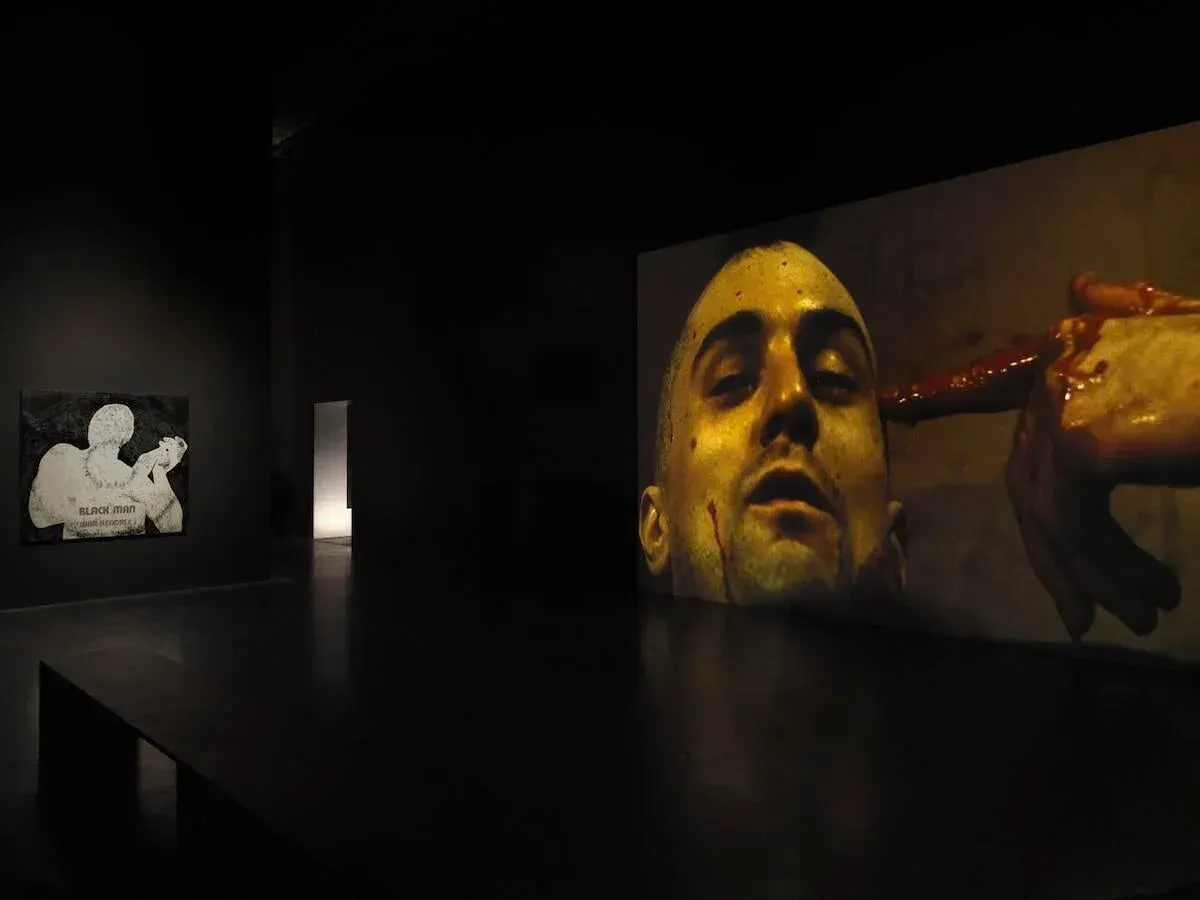
The New Museum in New York recently opened Arthur Jafa: I Am Tony, the first survey exhibition to cover over four decades of Jafa's creative activity. Characterized by Stephanie Wambugu of Hyperallergic as being “full of the artist’s characteristic gallows humor that ironizes even the most morbid images and brings to the surface the solemnity of low culture”, the exhibition spans two levels of the Lower Manhattan institution.
The theme of Blackness permeates the exhibition throughout, with the spaces divided into distinct thematic units that form black boxes, lit only by the video projections. This setting underscores the stark contrast between darkness and light, which mirrors Jafa's own understanding of the position that Blackness has in American culture. Holland Cotter of The New York Times writes, “Blackness, the message is, whether by fate or by choice, is always outside the circle of safety. Its ever-threatened status is both the root of its identity, and the source of its power.”
Inspired by syncopation as a musical device, Jafa's own visual grammar uses cuts, overlaps and sudden returns to create jarring portrayals of Black life in the United States. Jafa's deft application of these editing techniques reveal how race is portrayed in contemporary media, while simultaneously disrupting it. By pushing on this idea, Jafa emphasizes that this simple juxtaposition itself represents a form of violence.
Although Jafa has gained fame in the art world for both his innovative handling of video and film forms, many of the works featured in the exhibition go beyond the moving image. Alongside his more well-known video works, each gallery at the New Museum includes mural paintings, sculptures and inscribed plaques through which Jafa interprets the history of Blackness.
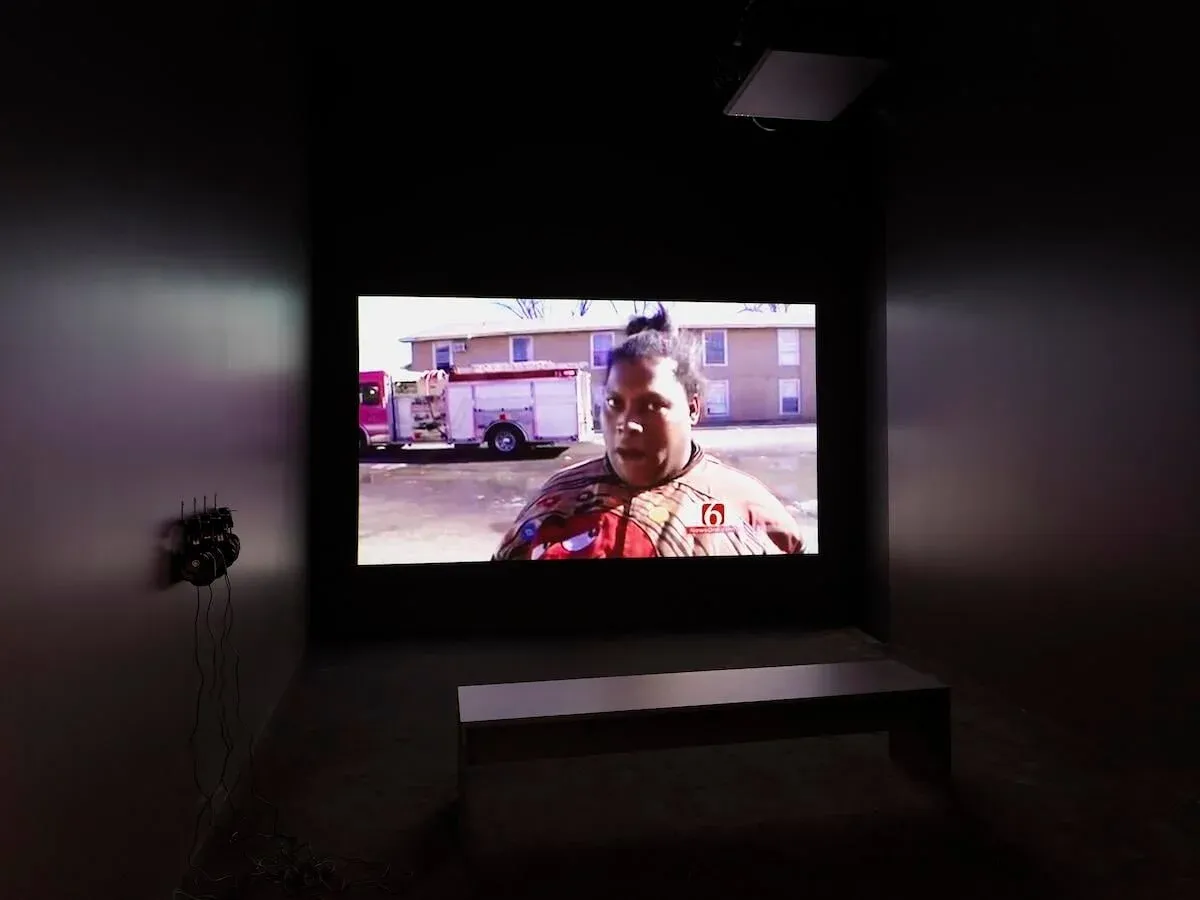
Commenting on Jafa's 2017 sculpture Ex-Slave Gordon, based on the famous photo depicting the scarred back of a man who had escaped a Louisiana plantation, Zachary Fine of the New Yorker says, “The man isn’t humanized or made whole by the incarnation; the plastic makes his wounds look chintzy, like a wall ornament you could buy on Temu. The implied critique, that Black suffering is just another commodity in our online superstore, is produced by transforming an image of nineteenth-century violence into contemporary kitsch.”
For some critics, this survey exhibition raises a seminal question about Arthur Jafa's art and what it has to offer to the art world. Zachary Fine of the New Yorker rightly points out that Jafa's established practice is that of appropriation of material which he then mixes together with just the right balance of harmony and dissonance to imbue them with new meaning. This approach is bold and innovative when applied to the video medium, but lacks emotional impact when he applies it in diptychs, contrasting different persons or objects.
Travis Diehl of Frieze, on the other hand, observes that Jafa uncovers hard truths about race and systemic violence in the United States through his art, while simultaneously underscoring the act of ‘facing facts’ has become an ensconced aspect of the American death cult. In his video works Jafa is able to portray all of the joy, the pain, the ecstasy, and suffering of Blackness to elicit a feeling of redemption and catharsis. The inherent contradiction of Black life in the United States is most tellingly revealed in his use of Kanye West's “Ultralight Beam” as the soundtrack for his most well-known piece, Love is the Message, the Message is Death. In Diehl's own words, “Even disgraced, West exudes the kind of irreconcilable excellence in extremis that America both loves and destroys. But the art industry isn’t ready to face that fact. So they look at Black culture through the relative safety of Jafa’s lens.”
The survey exhibition on Arthur Jafa opened at the New Museum on September 25 and is open to the public for viewing through January 4, 2027.