Macushla Robinson on exhibiting the immigrant experience
Robinson, Director of Shiva Gallery, speaks about the complexity of the immigrant experience and partnering with The Immigrant Artist Biennial.


Robinson, Director of Shiva Gallery, speaks about the complexity of the immigrant experience and partnering with The Immigrant Artist Biennial.

Anya and Andrew Shiva Gallery is the primary fine art gallery at John Jay College of Criminal Justice in New York City. The gallery, which was established in 2013, features a variety of media and concepts, but is heavily focused on themes of justice and politics.
Shiva Gallery is a presenting partner of The Immigrant Artist Biennial, and on November 11, 2026 it will host a screening and performance featuring works by Stephanie Comilang, Pearlyn Lii and mandla. This event is curated for the biennial by Anna Khimasia and Sofia Thiệu D'Amico. We spoke with Macushla Robinson, Director of Shiva Gallery, about the specifics of operating a university art gallery and why it was an "instant yes" when offered the chance to partner with The Immigrant Artist Biennial.
Shiva Gallery is focused on themes of justice and politics. Can you tell us more about the various ways this shapes the gallery program?
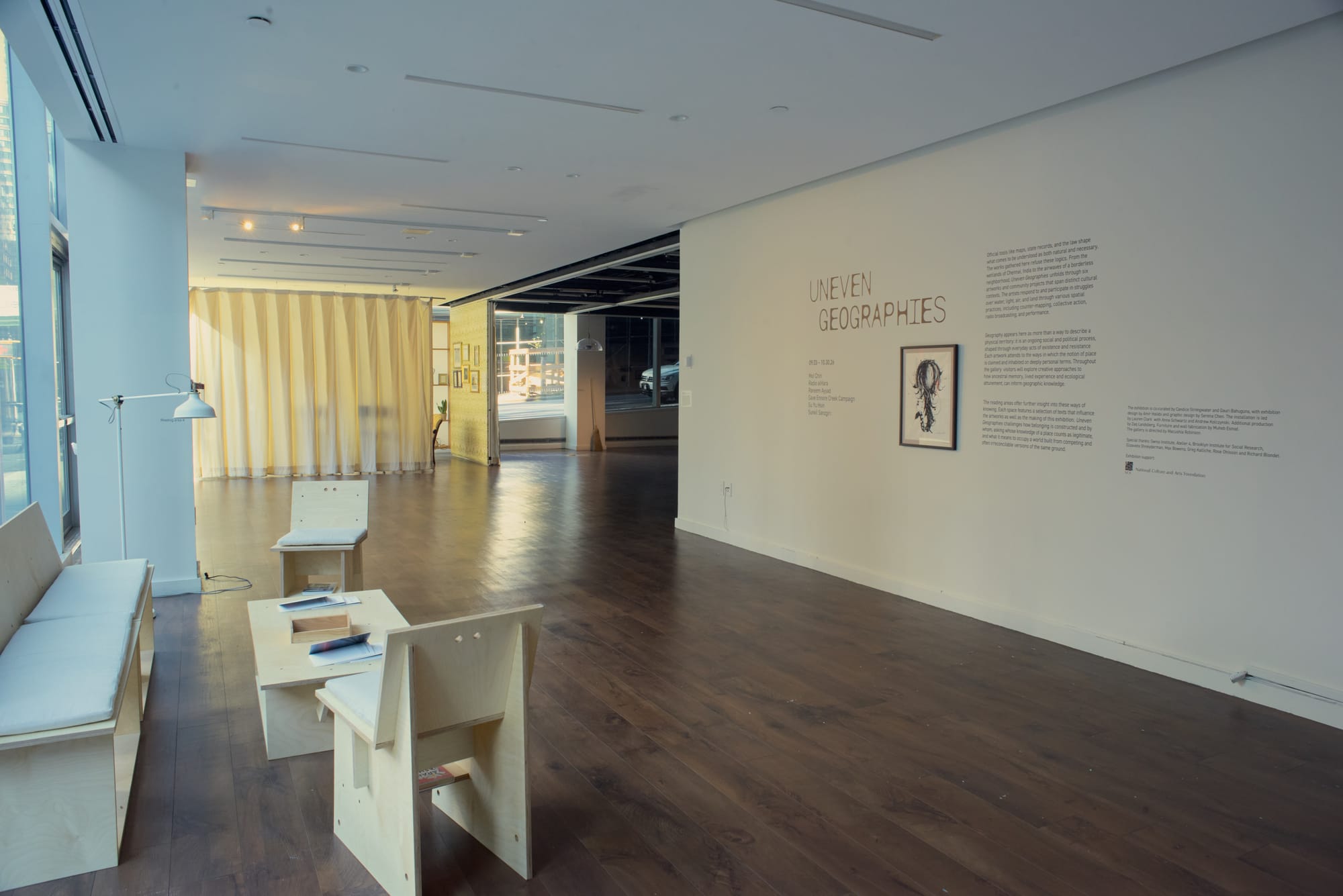
Our focus is shaped by our context – we are in the John Jay College of Criminal Justice. Naturally, because it’s in the name of the college in which we are located, we are interested in opening out the question of what this ubiquitous word and claim means. Our program is always looking for a way to engage with these themes in order to complicate it. We are interested in art primarily as a means of embodying socially relevant issues. This means that we present a lot of work that explores the various ways prevailing political decisions impact our everyday lives. Our current exhibition, for example, deals with the ways in which political and bureaucratic tools like cartography can lay claim to natural resources, wresting them away from communities who need them. The exhibition (titled Uneven Geographies) foregrounds works by artists and activists who contest and inhabit space otherwise.
What are some of the benefits and challenges of being in relation with an academic institution?
Since we are a university art gallery, one of our key audiences is the student and faculty body at John Jay. Many of our students are future lawyers, administrators and municipal workers; they are majority-minority, many of them are the first in their families to go to college, and many of them have never set foot in an art gallery before.
We are necessarily an interdisciplinary, pedagogical space, and this forces us not to take anything for granted. As director I am always modifying and responding to the students and faculty who come through the space, and the kinds of conversations that emerge in the gallery as classroom. We develop an education kit for each exhibition, and for the past few exhibitions we have included a glossary because I find that each exhibition has its own set of terminology that we as curators, and as faculty, tend to take for granted. The education kit not only serves as an interface between curatorial voices and the student body, it also provides faculty from disciplines such as the social sciences, law, forensics, psychology, among others, examples of ways to work with visual and cultural materials to convey ideas that are relevant in their disciplines.
I remain a huge believer in the university art gallery as institution – we get the privilege of not being commercial spaces, with access to a scholarly community who both feed and challenge us conceptually.
Shiva Gallery is a partner institution of The Immigrant Artist Biennial. How did this partnership come into being and what will be presented at the biennial?
When presented with the opportunity to partner with the biennale, it was an instant yes. The work that the Immigrant Artist Biennale does is so important at this moment in history, and it is really appropriate to our particular campus. Many of my students embody the immigrant experience in New York; the way that they show up in my classroom and the gallery is constantly educating me about the nature of being an immigrant. I too am an immigrant, and I think that the complexity of this experience – which is manifold and diverse – should always be unpacked and explored.
We are hosting both a film screening and a performance that explore themes of inheritance. Not just the literal inheritance of things, but the embodied inheritance of transgenerational memory, trauma, culture and identity. The program is curated by Anna Khimasia and Sofia Thiệu D'Amico, and it’s titled What We Carry. The idea that our bodies carry something from before we were born is particularly important here – we are vessels, and as migrants we carry our inheritance tucked away in our cellular and somatic corporealities – across national boundaries and spaces as well as time.
What are some of the spaces in New York City that you feel have the most consistently exciting programs?
It really depends on what you are looking for! There are, of course, fantastic museums across the city, and I love a lot of the exhibitions that are happening this season in New York. It’s hard not to love big impressive spaces like Park Avenue Armory, for example. But I am most deeply invested in, and a fan of, the university gallery network. There are many exciting exhibitions coming up in the CUNY network of galleries, like the current exhibition at the James Gallery (at the CUNY Graduate Center). I am also a fan of unusual spaces in the least expected places, like Mmuseumm (a tiny space in the goods lift in Courtland Alley).
Can you give us a preview of coming attractions at Shiva Gallery?
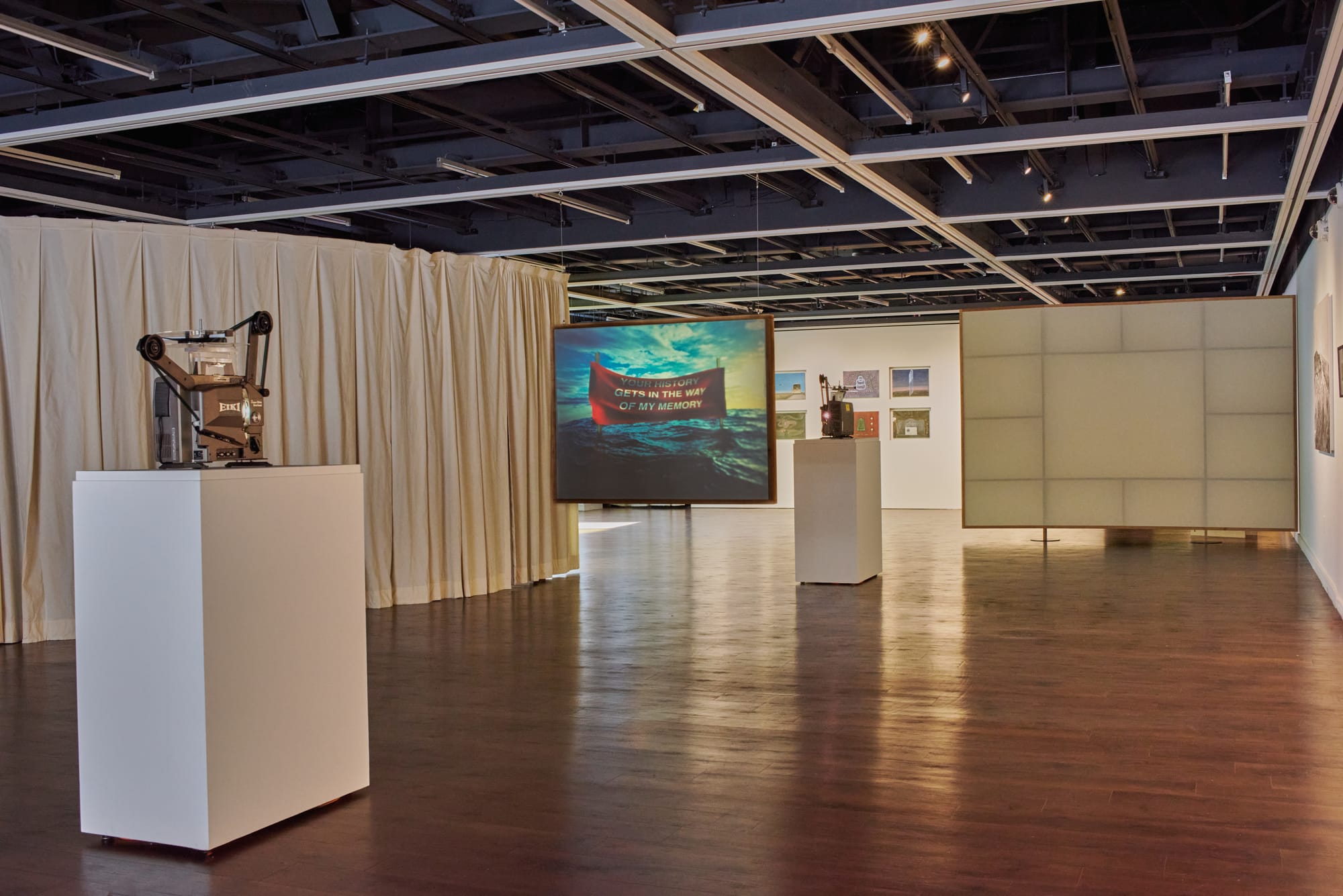
This semester, our exhibitions have addressed themes of environmental justice and resource extraction; our current exhibition, which closes at the end of the month, engages with the ways in which different artists and activist groups push back against official tools of demarcating space and sequestering resources. The artists all come from very different backgrounds and their works address very specific contexts, but each in their own way addresses what it means to inhabit a place against the tide of bureaucracy and corporate appropriation.
Our next exhibition, which will open the week after The Immigrant Artist Biennale, is curated by Elisa Guiterrez Erikson, and it’s called Tierras Rotas, which means Broken Earths. It explores embodied relationships to land, feminism, decolonization, neo-extractivism, spirituality and ecology. The curator says that it examines the fault lines, cracks, and planetary ruptures – through the lens of “geologic intimacy” (following the writing of David Farrier). I’m really looking forward to it coming into being!
