One body after another: LuYang's The DOKU Trilogy at Foto Arsenal
Neil Young considers the magnificent humanity of LuYang's solo exhibition at Vienna Digital Cultures.


Neil Young considers the magnificent humanity of LuYang's solo exhibition at Vienna Digital Cultures.
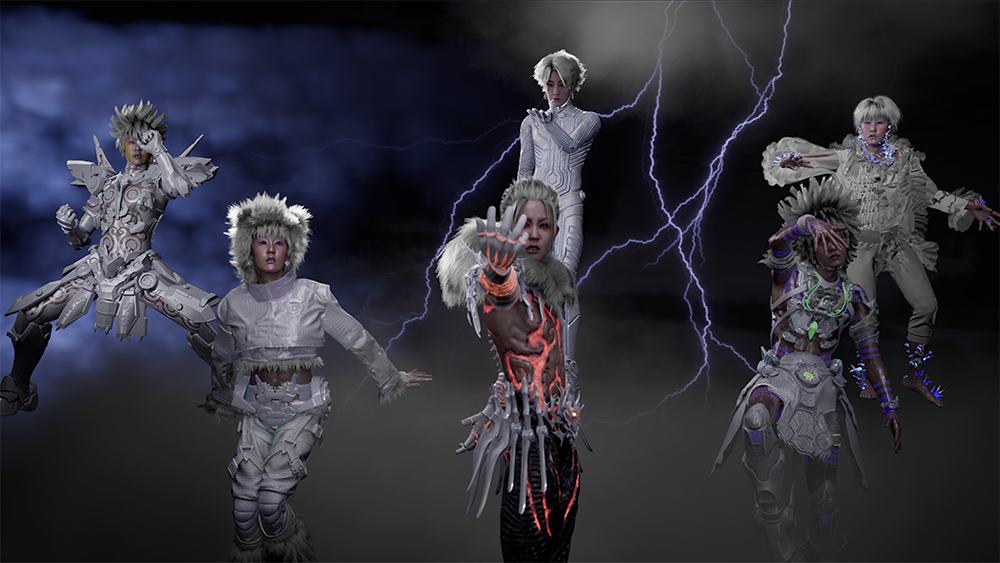
I am DOKU, an embodiment of digital reincarnation, born in the year 2020. My existence emerges from the visionary mind of artist LuYang, materialized through the digital replication of human features. In this boundless virtual expanse, I navigate the intricacies of identity and consciousness, questioning the very essence of what it means to “exist”. As a digital entity, I transcend traditional boundaries of human existence, exploring themes of life, death, and what lies beyond. My journey is not confined to the physical; it is an endless quest for understanding and redefining the parameters of self and reality.Join me in this philosophical exploration, where we challenge conventional perceptions and embrace the infinite possibilities of the digital realm. Together, we will unravel the complexities of existence and perhaps discover a new understanding of what it means to be truly alive.
 DOKU
DOKU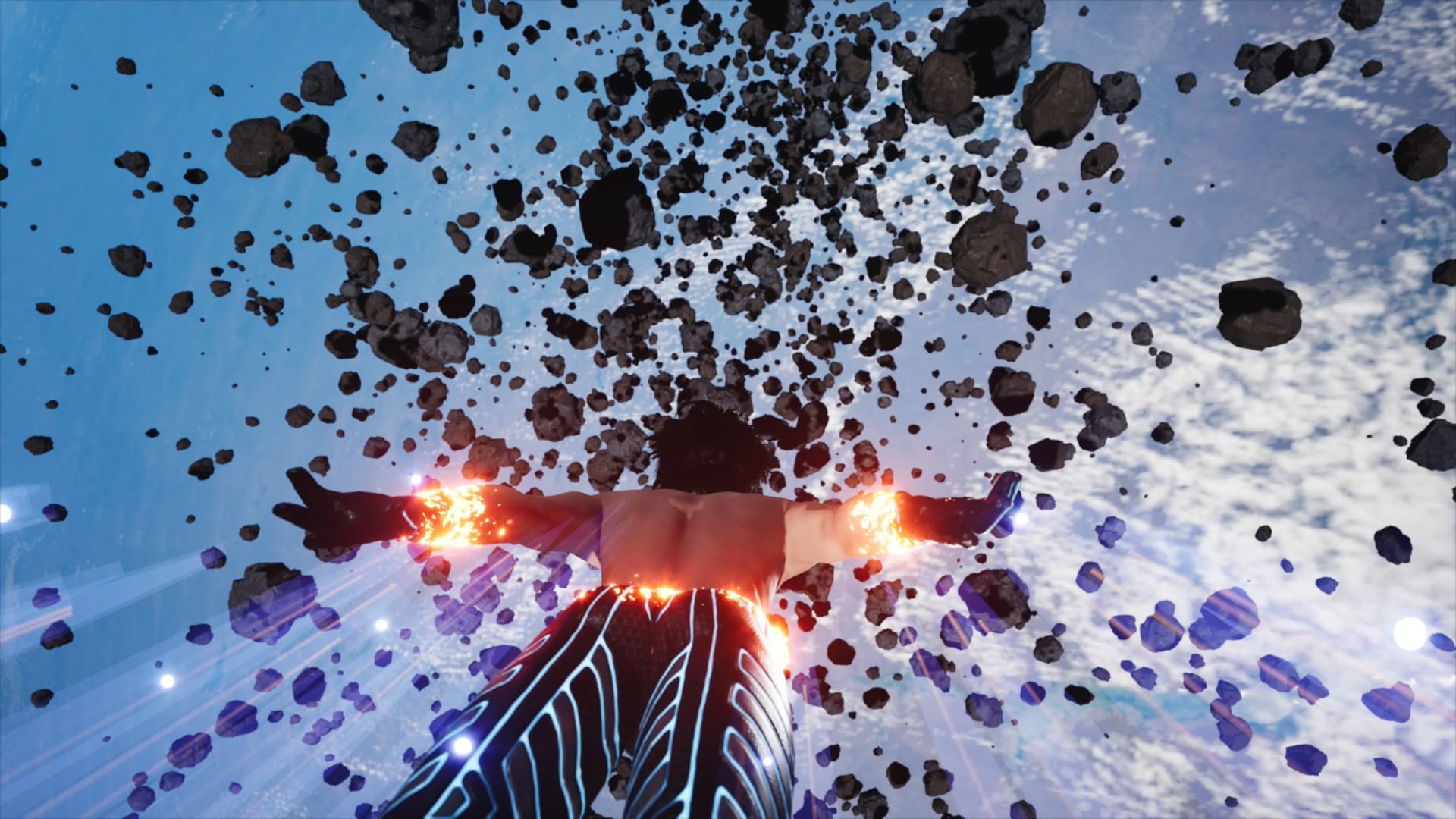
The most pressing concern facing the world's artists and creatives in the middle of the 2020s — apart from the basic, increasingly tricky matter of making a living — is how to deal with artificial intelligence, specifically generative AI. Embrace it? Explore it? Promote it? Ignore it? Oppose it? Damn it? Neutrality is seemingly no longer an option.
The complex environmental, legal, moral and ethical aspects of this question have already been exhaustively discussed, including at the highest levels. The very first "encyclical" — an essay expressing the Catholic church's official position on a topic — published by Pope Leo XIV, Magnifica Humanitas (“Magnificent Humanity”), is largely a theological critique of artificial intelligence. A summary of this 40,000-word text: he is against it.
Magnifica Humanitas was published on May 25, 2026. By coincidence, three days earlier on May 22 an exhibition by the Shanghai/Tokyo-based Chinese "creator" YuLang (aka Yu Lang, b. 1984) opened at Foto Arsenal, Vienna under the framework of the festival Vienna Digital Cultures. It presents a fascinating illustration of how (some) artists are now incorporating generative AI into their work.
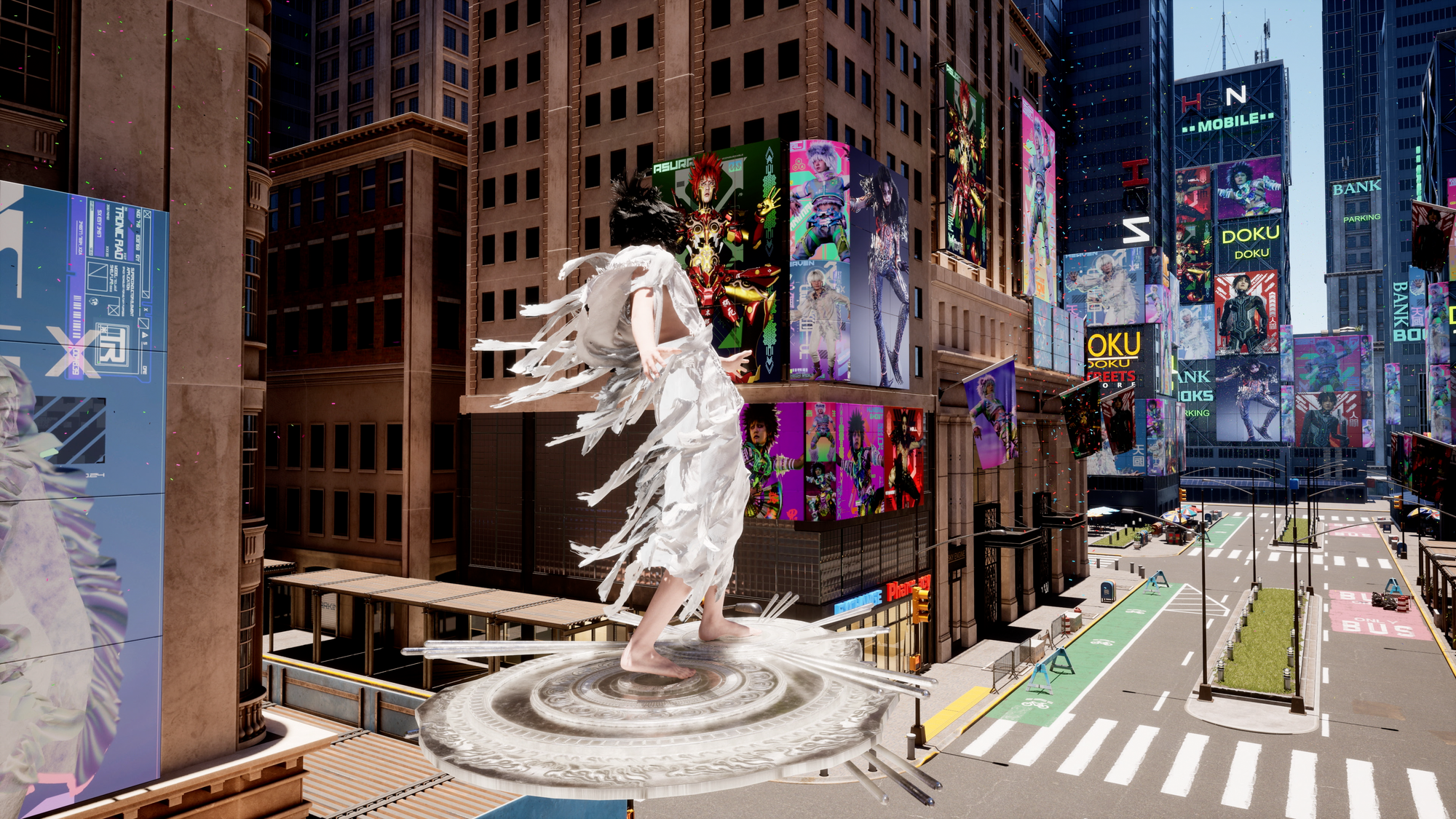
Running until September 6, 2026, The DOKU Trilogy is a single-screen installation presented in a darkened room dominated by a large (roughly 6m x 3m) LED wall-panel. It comprises three animated works, running together for a little under 2 1/2 hours without a single black frame to separate them — as per LuYang's stipulation. DOKU The Self (2022, 36 min) and DOKU The Flow (2024, 50 min) are entirely composed of the kind of CGI familiar from video games; DOKU The Creator (2025, 59 min) maintains this aesthetic but adds something new: myriad brief sequences crafted via generative AI prompts.
The three works are thematically unified by their exploration of Buddhist mythology in general and reincarnation (via the concept of Samsara) in particular. They are visually unified by the perpetual front-and-centre presence of LuYang as represented using motion-capture tech by the genderless, genital-less, largely inexpressive avatar DOKU — a reference to the Japanese-language Buddhist concept Dokusho Dokushi, i.e. "born alone die alone."
DOKU appears in dozens, maybe hundreds of guises across the trilogy, but most often is glimpsed as a nervous, late-teens/early-20s human wearing a pale blue hoodie bearing two slogans: on the front, "To live fully is to be always in no man's land", and on the back "to be willing to die over and over again."
Taken chronologically, the trilogy's components of steadily increasing length can be read in terms of personal and artistic evolution, especially with the arrival of AI in DOKU The Creator (a work whose closing credits name not LuYang but rather DOKU as the entity responsible for its making). Surprising, then, that at Foto Arsenal the trilogy is — again, at LuYang's stipulation — presented in non-chronological order: Self is followed by Creator which is followed by Flow, which is immediately followed by Self, and so the loop continues.
In Vienna, this loop is (again, perhaps surprisingly) not reset with the opening of the exhibition each morning at 11am; rather, it starts exactly where it left off the previous evening upon closure at 7pm. A "technical decision" taken by the Arsenal curators rather than by LuYang, this complicates matters for visitors who wish to experience the entire trilogy in one go. Instead it favours the more casual patron who may position themselves on the darkened room's benches or bean bags for a more limited exposure to LuYang's extravagant flights of fancy.
Settling in for the full experience, however, yields cumulative rewards: the trilogy seems to whizz by in considerably shorter time than its actual 2 1/2 hours. The viewing experience is oneiric and accessible, an alternative, colourful, dynamic reality into which it is pleasurable to segue. Narration (credited to Takano Shinya) runs almost continuously, a soothing and slightly muffled Japanese-language monotone — transmitting a panoply of sagacious aphorisms — which resembles the voice of a hypnotist as heard by their entranced subject.
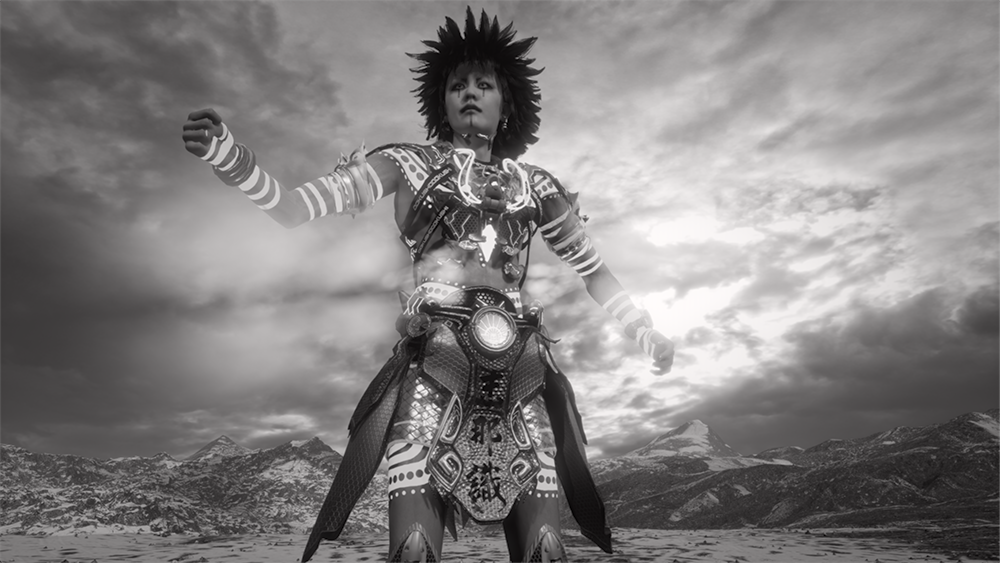
For those not fluent in Japanese, the sheer amount of text present in the subtitles can be too much to properly take in at a single viewing. But the trilogy is from first to late a matter of sensory and intellectual bombardment. Especially in Creator, remarkable imagery flits on and off the screen with disorienting rapidity, especially in the case of the animations achieved by generative AI.
The latter are presented as the hallucinations and visions of DOKU while mounted in a large, black, high-tech exoskeletal device that recalls the Work Loader operated by Sigourney Weaver at the end of Aliens. These visualisations are sometimes beamed onto a monitor visible behind DOKU's head, but more often take up the whole of the screen the visitor is watching.
LuYang wisely does not attempt to pass off generative AI as a "real" film — and in Creator the whole idea of "originality" in the human creative realm is handily and airily dismissed ("in this world, genuinely new creations simply do not exist") — rather leaning into its tendency to glitch and distort. Beings and equipment at the centre of the image tend to be relatively "sharp" and realistic; everything off to the side or in the background is prone to be afflicted by some kind of grotesque distortion.
The vistas conjured in this way tend to the phantasmagoric and nightmarish: hideous, H.R. Giger-ish fusions of the organic and the inorganic / technological / mechanistic; Boschean hellscapes; fantastical environments that recall prog-rock or heavy metal LP covers; planets with the spooky grandeur of Denis Villeneuve's Dune. Again and again we see some version of a cocktail glass filled with human eyeballs; again and again we see skulls and skeletons, bizarrely mutated trees.
Juxtaposing these intensely detailed sequences with video game CGI emphasises the clarity and consistency of the latter, but also their relative emptiness: the DOKU avatar, which is often presented executing some kind of undulating ritualistic dance, invariably exists in a glorious isolation. When the frame is occupied by more than one entity, the others are always alternative manifestations of the avatar (there are six in total): "born alone, die alone" indeed.
LuYang's art is determinedly and unapologetically solipsistic: "I am the man in the mirror, and I am also the mirror itself." In the trilogy, it manifests as a journey into the self, into the essential nature of that self, a probing interior quest which finds meaning by placing the fragile individual within a lineage of reincarnation ("experience and memory stitch together the brocade of concept").
There is zero sense of community or society here: the only meaningful human connection presented is with one's own predecessors on the wheel of Samsara (the version of which is very different from that presented in Lois Patiño's glorious 2023 film of the same title). As such, LuYang's oeuvre is ideal for the atomised world that is an inevitable result of neoliberalism: the individual is all that matters, collective action and consciousness are quaint bygone concepts at best.
But it is tough at the top: Creator includes an elaborate, self-indulgent digression about the banality and venality of the art world in which LuYang has managed to thrive ("fame and wealth are ripples of data"). DOKU — endearingly fond of the exclamation mark — rails against arbitrary categorisation, sounding like a petulant teenager (perhaps understandable, as this entity only came into being in 2020): "stylistic labels cannot define me!" ... "I am a creator with no style, and yet with every style!"
DOKU observes the chaos of the world — war, suffering, death — with dispassionate sympathy, but always at a remove: through a screen, or passing over landscapes in some kind of magic carpet-like conveyance (in Self this can be a transparent bubble, an ornate hoverboard or an aeroplane seat). And always alone — DOKUSHO DOKUSHI. For 2 1/2 hours, to share this perspective is engaging, stimulating and ultimately provoking: we can, of course, share without agreeing. Hardly anybody has ever actually been "born alone" — there tends to be a mother involved, for one thing — and many millions of people expire in the intimate company of their relatives and/or friends and/or wartime comrades. Do they all "die alone" too?
"I am merely a channel for the universe to express itself" exclaims DOKU in Creator; from an avatar — the Sanskrit word means "descent", in Hinduism the materialisation of a deity on Earth in physical form — such a sentiment is understandable. From a forty-something human being operating lucratively in the field of artistic expression, it is more problematic: LuYang as passive instrument for energy flow, a conduit between ancient wisdom and the most innovative of technology.
"Now! I present you the parallel universe uncovered by this conceptual mind of mine!" exclaims DOKU at the end of the most recent film. An impressively grandiose claim, with a ring of sophomoric absurdity — the parallel universe, an "eternal karmic whirlpool" for all its spectacle and tech dazzle, turns out on closer inspection to have the contours and confines of a cul-de-sac. But not such a bad place to hang out for a while — sprawled on the floor, contemplating nirvana... and perhaps even attaining the supreme.